Walk up to any checkout counter, reception desk, or pharmacy window and you will likely see a clear barrier between the employee and the customer. You probably do not think much about it — until you need to buy one for your own business. Then the questions start: What material is best? How big should it be? Does it need a pass-through window? Will it even stay clean after a busy day? This guide answers those questions and more, covering everything from material choices to installation to the mistakes most businesses make when buying protective barriers.

7 Reasons Acrylic Beats Glass for Protective Barriers
When it comes to sneeze guards and protective barriers, acrylic and glass are the two main options. Most businesses end up choosing acrylic — here is why:

- It will not shatter. Glass barriers can break into dangerous shards if hit hard enough. Acrylic is 10 to 17 times more impact-resistant. It might chip or crack, but it does not shatter — a critical safety factor in busy retail and food service environments.
- It is lighter to ship and install. Acrylic weighs roughly half of what glass weighs. That means lower shipping costs, easier handling during installation, and less stress on mounting hardware. A 36-inch glass barrier might take two people to lift; the same acrylic size one person can handle.
- It is clearer in thick sizes. Thick glass develops a green tint along the edges that becomes more noticeable as the panel gets bigger. Acrylic stays crystal clear no matter the thickness, so the barrier stays visually unobtrusive.
- It is easier to customize. Need a pass-through window? A curved top? A custom cutout for a payment terminal? Acrylic cuts and fabricates cleanly with laser or CNC tools. Custom glass is possible but far more expensive and has longer lead times.
- Scratches can be fixed. Both materials scratch, but only acrylic scratches can be repaired. A scratched acrylic barrier can be buffed back to clarity with acrylic polish. A scratched glass barrier stays scratched permanently.
- It costs less. Acrylic barriers typically cost 30-50% less than equivalent glass barriers. For businesses that need multiple barriers — a full row of checkout lanes, for example — that difference adds up quickly.
- It is safer for food service. Because acrylic does not shatter, there is no risk of broken glass getting into food. That is why acrylic sneeze guards are the standard choice in cafeterias, buffets, and food courts where glass breakage would be a contamination hazard.
Types of Acrylic Sneeze Guards & Barriers
Not all acrylic barriers are the same. The right type depends on where it goes and what it needs to do.
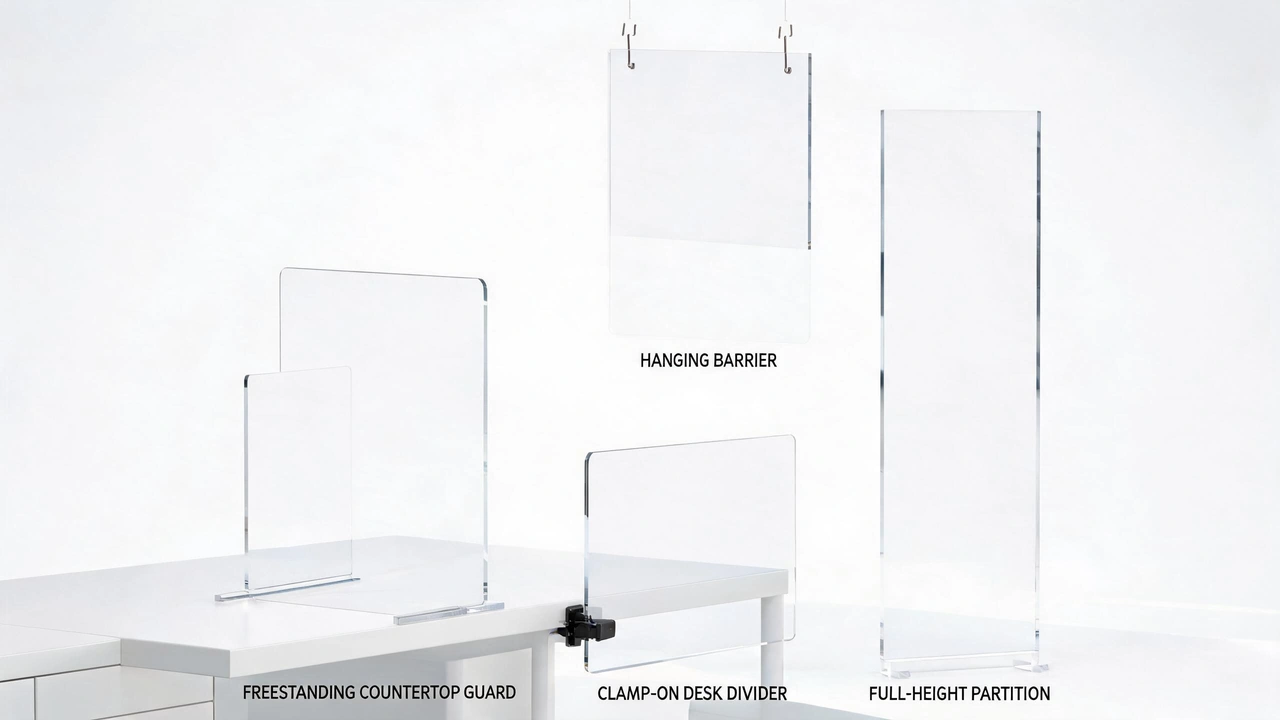
Freestanding countertop guards
The most common type — a clear acrylic panel that sits on a counter or desk, held up by two side supports or a base. Freestanding guards are easy to move and reposition, which makes them popular for offices, reception desks, and retail counters. They come in standard sizes (24×24, 36×24, 48×24 inches are common) or can be custom-sized for specific counters. For more details, see our custom acrylic design guide.
Hanging or ceiling-mounted barriers
For areas where counter space is limited or where a more seamless look is desired, hanging barriers suspend from the ceiling or an overhead structure. They are common at bank teller windows, pharmacy counters, and ticket booths. The lack of side supports gives them a cleaner appearance and makes the barrier less noticeable.
Full-height floor-to-counter partitions
These barriers run from the floor to above head height, creating a full wall of protection between two spaces. They are used in drive-through windows, vaccination clinics, and some reception areas where a higher level of separation is needed. Full-height partitions often include a transaction window or pass-through slot at counter level.
Portable and clamp-on barriers
For flexible workspaces, portable barriers can be moved around as needed. Clamp-on versions attach to desk edges without drilling, making them popular for open offices and shared workspaces. Some portable barriers fold flat for easy storage when not in use.
| Type | Best For | Installation | Typical Thickness |
| Freestanding countertop | Retail counters, reception desks | Place and go — no tools | 6mm |
| Hanging / ceiling-mounted | Bank windows, pharmacies, ticket booths | Hardware mounted to ceiling or overhead | 6-8mm |
| Full-height partition | Drive-throughs, clinics, secure counters | Floor and wall mounting required | 8-10mm |
| Clamp-on desk divider | Open offices, shared workspaces | Clamp to desk edge — no drilling | 5-6mm |
Depending on the application, we typically fabricate acrylic sneeze guards in 6mm to 10mm cast acrylic with polished edges, available with pass-through windows, transaction slots, or custom cutouts for payment terminals and intercom systems.
Where Businesses Use Acrylic Barriers (5 Real Scenarios)
Protective barriers show up in more places than you might realize. Here is how different industries use them.
Grocery and retail checkout
A regional grocery chain with 12 locations needs sneeze guards for every checkout lane in every store. That adds up to over 80 individual barriers. The barriers need to be durable enough for a busy retail environment, easy to clean, and sized to fit different counter widths at different locations.
Freestanding acrylic sneeze guards are the solution. Each store gets barriers sized for its specific counter widths. The acrylic is easy to wipe down between customers, and if a guard gets damaged by a shopping cart or a dropped item, it can be replaced individually without replacing the whole setup. The clear material means cashiers and customers can still see each other clearly and have normal conversations through the barrier.

Restaurant and cafeteria buffet lines
A university dining hall serves thousands of meals a day through a buffet line. The food service director needs sneeze guards that meet health code requirements, are easy to clean at the end of service, and can handle the high traffic of students moving through the line at meal times.
Overhead acrylic sneeze guards suspended above the buffet line work best here. They hang from above, leaving the counter surface completely clear for food pans and easy cleaning. The curved front profile gives students room to lean in slightly while serving themselves, while still providing the required protection. And because acrylic does not shatter, there is no risk of broken glass getting into the food if something falls or hits the guard. For more details, see our cleaning acrylic guide.

Office reception and lobbies
A corporate office building in New York wants protective barriers at its reception desks and visitor check-in areas. The barriers need to look professional — not like a temporary installation. They also need to accommodate intercoms, visitor sign-in tablets, and payment terminals.
Custom acrylic reception barriers are designed to fit the exact dimensions of each desk. Each barrier has a custom cutout at the bottom for the intercom speaker and a slot for visitor badges and documents. The clear acrylic matches the modern design of the lobby and does not obstruct the view of the reception staff, which is important for making visitors feel welcome. The barriers are mounted to the desk surface with low-profile hardware that does not detract from the clean appearance.

Pharmacy and healthcare counters
A pharmacy chain needs counter barriers for its prescription pickup windows. The barriers need to provide a high level of protection while still allowing pharmacists to hand over prescriptions and accept payment. They also need to be tall enough to prevent cross-contamination at a pharmacy counter where sick patients are coming and going.
Taller-than-standard acrylic barriers — 48 inches tall instead of the usual 24 — give the extra height the pharmacy needs. A pass-through transaction window at counter level allows prescriptions and payment to pass back and forth. The clear acrylic means patients can still see the pharmacist, which is important for building trust in a healthcare setting. And because acrylic is easy to sanitize, staff can wipe down the barrier between customers without worrying about damaging the material.

Open office desk partitions
A tech company with an open-plan office wants to add some separation between desks without losing the open feel of the space. Solid cubicle walls would defeat the purpose of the open plan, but employees want some visual and physical separation between workstations.
Clamp-on acrylic desk dividers are the middle ground. Each divider clips onto the edge of a desk without drilling, so they can be installed quickly and repositioned as the office layout changes. The clear acrylic provides a physical barrier while keeping the space visually open — natural light still flows between desks, and employees can still see their teammates. For a company that values both collaboration and individual focus, acrylic dividers give the best of both worlds.
5 Common Mistakes to Avoid When Buying Sneeze Guards
Businesses new to buying protective barriers often make the same mistakes. Here is what to watch for:
Mistake #1: Buying the thinnest material to save money. Thin acrylic (3mm or less) can warp, bow, or flex — especially in taller sizes. For countertop guards, 6mm is the minimum for durability. For full-height partitions, go with 8-10mm. The extra cost is worth it for a barrier that stays straight and rigid over time.
Mistake #2: Not measuring correctly. A barrier that is too short does not provide adequate protection. One that is too wide does not fit the counter. Measure the exact counter width and consider how high the barrier needs to be. For checkout counters, 24 inches above the counter surface is standard. For healthcare settings, 36-48 inches may be needed.
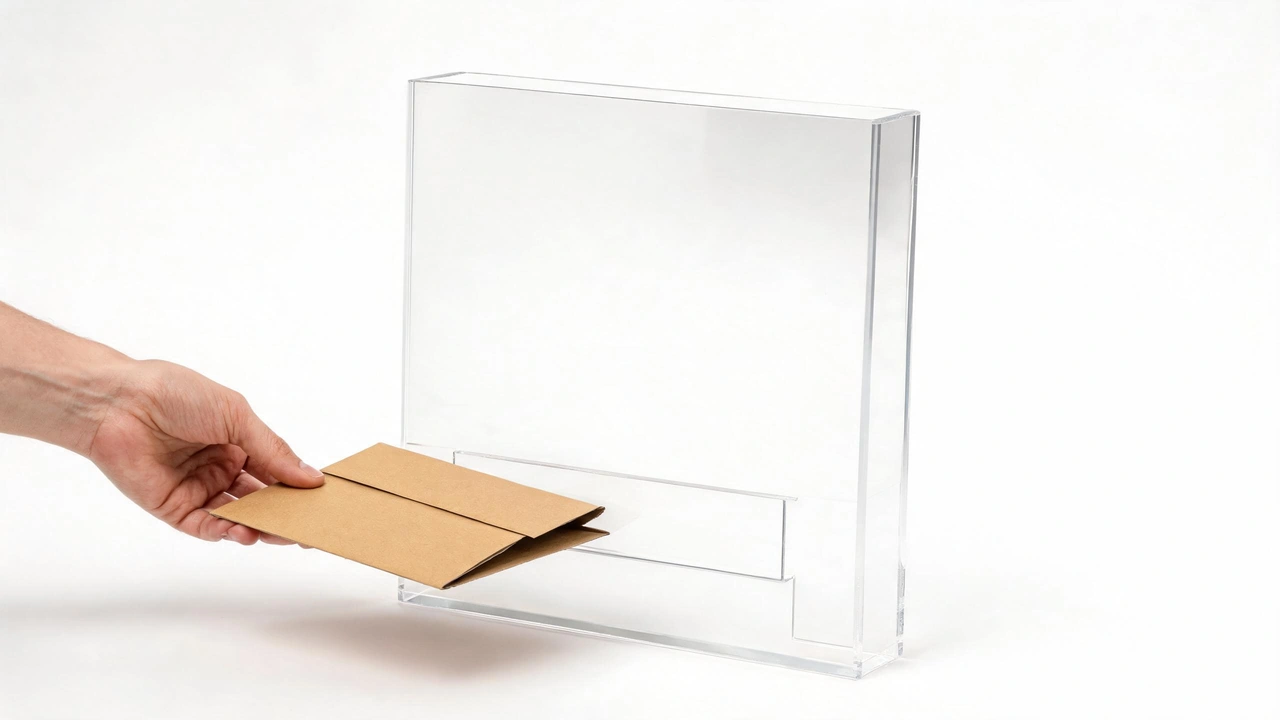
Mistake #3: Forgetting the pass-through. A solid barrier with no opening means employees and customers have to reach around the sides or pass items over the top, which defeats the purpose. Most businesses need some kind of opening — a transaction slot, a pass-through window, or a cutout for a payment terminal.
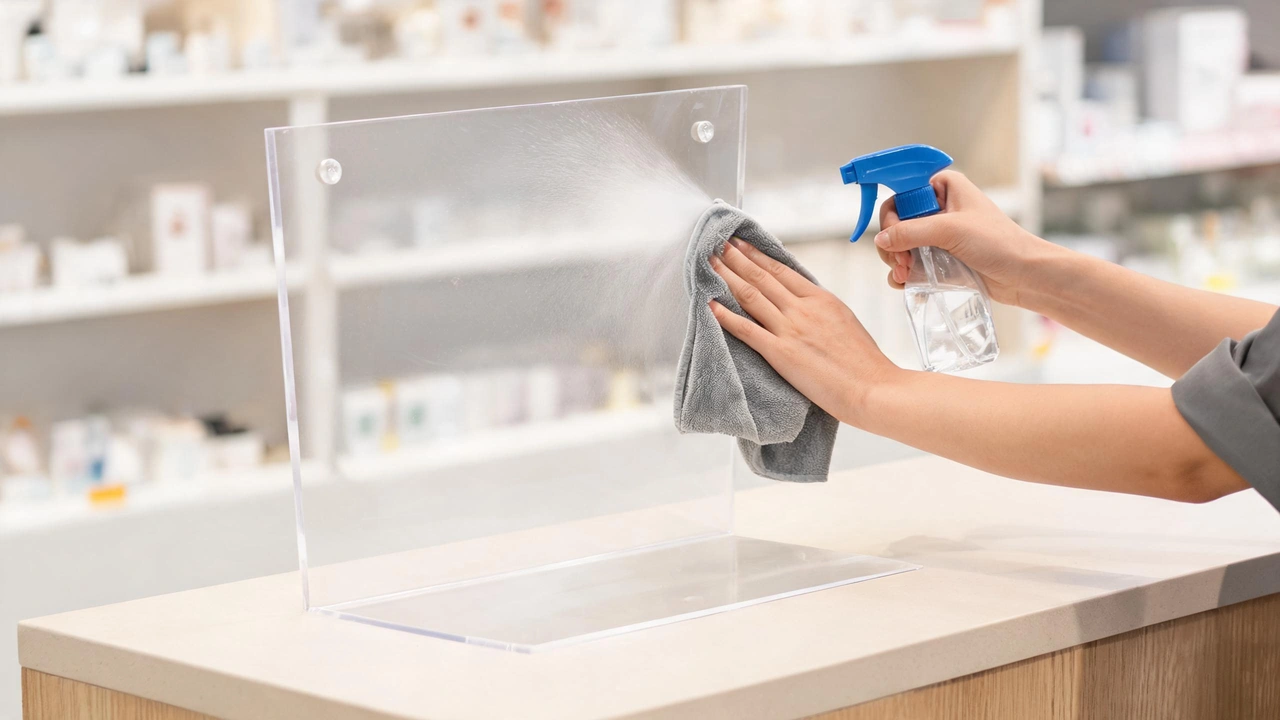
Mistake #4: Using the wrong cleaning products. Ammonia-based glass cleaners can cause micro-cracking and clouding in acrylic over time. Use mild soap and water or acrylic-specific cleaners with a soft cloth. Paper towels and abrasive sponges will scratch the surface, so stick to microfiber cloths.
Mistake #5: Choosing cheap extruded acrylic. Extruded acrylic costs less but has lower clarity, more surface imperfections, and lower impact resistance than cell-cast acrylic. For a barrier that needs to look good and last, cell-cast acrylic is the better choice. The difference in appearance and durability is noticeable.
Installation & Maintenance Tips
Getting the most out of your acrylic barriers depends on proper installation and regular care. Here is what you need to know:

Installation tips
- Use the right mounting hardware. Freestanding guards should have stable bases or side supports that do not wobble. For wall-mounted or hanging barriers, make sure the mounting hardware is rated for the weight and that you are screwing into studs or using appropriate wall anchors.
- Level it properly. A barrier that is tilted or uneven looks unprofessional and may not provide full coverage. Use a level during installation to make sure the top edge is straight and the panel is vertical.
- Leave a small gap at the bottom for airflow. Completely sealed barriers can create air pressure differences that make it hard to pass items through. A half-inch gap at the bottom allows air to circulate while still providing protection. This is especially important for taller barriers.
Maintenance tips
- Clean daily with the right products. Wipe down barriers at the end of each day with a soft microfiber cloth and mild soap and water or acrylic cleaner. Avoid ammonia, bleach, and abrasive cleaners — these can damage the acrylic surface over time.
- Remove scratches promptly. Light surface scratches can be buffed out with acrylic polish. The sooner you address them, the easier they are to remove. Deeper scratches may need sanding with fine grit and then buffing.
- Inspect mounting hardware regularly. Check screws and brackets every few months to make sure nothing has worked loose. Tighten as needed. For freestanding guards, make sure the base supports are still securely attached to the counter.
| Cleaning Product | Safe for Acrylic? | Notes |
| Mild soap and water | Yes | Best daily cleaner; rinse and dry with microfiber |
| Acrylic-specific cleaner | Yes | Formulated for acrylic; prevents static buildup |
| Glass cleaner (ammonia) | No | Causes micro-cracking and clouding over time |
| Bleach solutions | No | Can cause discoloration and surface damage |
| Abrasive sponges | No | Will scratch the acrylic surface |
| Microfiber cloth | Yes | Best cloth choice; soft and lint-free |
| Paper towels | No | Can cause fine scratches from wood pulp fibers |
Frequently Asked Questions
How thick should acrylic sneeze guards be?
Countertop sneeze guards should be at least 6mm thick for durability. Full-height partitions and larger panels need 8-10mm to stay rigid and prevent bowing. Thinner material can warp or flex over time.
Can acrylic sneeze guards be custom sized?
Yes — acrylic barriers can be custom cut to any dimensions. They can also include pass-through windows, transaction slots, and custom cutouts for payment terminals, intercoms, or other equipment.
Are acrylic barriers easy to install?
Freestanding countertop guards are ready to use out of the box — just place them on the counter. Hanging and wall-mounted barriers require basic tools and hardware but are straightforward to install with a drill and level.
How do you clean acrylic sneeze guards?
Use a soft microfiber cloth with mild soap and water or acrylic-specific cleaner. Avoid ammonia-based glass cleaners, bleach, and abrasive sponges — these can scratch or damage the acrylic surface over time.
Can acrylic barriers be used outdoors?
UV-stabilized acrylic can be used outdoors. Standard acrylic may develop slight yellowing with prolonged sun exposure. For permanent outdoor installations, specify UV-rated cast acrylic.
How much do acrylic sneeze guards cost?
Standard countertop guards range from $50-150 depending on size and thickness. Custom barriers with pass-through windows or special cutouts cost more. Full-height partitions and custom installations are quoted based on specific dimensions and requirements.
Can scratches in acrylic barriers be repaired?
Yes — light surface scratches can be buffed out with acrylic polish and a soft cloth. Deeper scratches may require wet sanding with progressively finer grits followed by buffing to restore clarity.
Get the Right Barriers for Your Space
Protective barriers are easy to take for granted — until you need to buy them and realize how many choices there are. The right acrylic sneeze guard or barrier is sized correctly for your space, made from quality cast acrylic, and installed properly so it stays in place and looks good for years.
If you are shopping for barriers for your business, our team can help you choose the right type, thickness, and size for your specific space and needs. We can also fabricate custom barriers with pass-through windows, cutouts, and any other features you require. Reach out for a free consultation and we will help you find the best solution. For more details, see our acrylic fabrication guide. For more details, see our acrylic sheet thickness guide.