
When off-the-shelf displays don’t quite fit your product, space, or brand, custom acrylic display design is the answer. Custom displays let you showcase products exactly the way you want, reinforce your brand identity, and create a customer experience that stock fixtures simply can’t match. But designing a custom acrylic display isn’t as simple as sketching something on paper — you need to consider material selection, structural integrity, production feasibility, and cost. This guide walks you through the entire custom design process from concept to completion.
Why Acrylic Is the Go-To Material for Retail Displays
Walk into any high-end retail store, museum, or trade show, and you’ll notice something consistent: acrylic is everywhere Read more in our trade show booth design guide. From sleek product showcases to elegant countertop displays, acrylic has become the material of choice for visual merchandising professionals worldwide. But why has this clear plastic so thoroughly displaced traditional materials like wood, metal, and glass?
The answer lies in a unique combination of properties that no other material can match at a comparable price point. Acrylic offers optical clarity that rivals glass — transmitting 92% of visible light — while weighing roughly half as much. It’s virtually shatterproof compared to glass, making it safer in customer-facing environments. It won’t rot, rust, or degrade the way wood and metal can. And perhaps most importantly for businesses, it can be fabricated into virtually any shape with precision that other materials simply can’t achieve.
From a branding perspective, acrylic’s transparency creates a sense of openness and sophistication Read more in our acrylic display solutions guide. Products displayed on or in acrylic fixtures appear to float, drawing the eye and commanding attention in a way that opaque displays cannot. This psychological effect translates directly to increased dwell time and, ultimately, higher sales conversion rates. Studies in retail psychology consistently show that products displayed with greater visibility and perceived value generate more customer engagement.
Types of Custom Acrylic Displays
The versatility of acrylic means it can be fabricated into an enormous range of display types. Understanding the main categories helps you identify which style best suits your products and retail environment.
Countertop Displays: These compact fixtures sit on checkout counters, reception desks, and display tables. They’re designed to capture impulse purchases and highlight featured products at eye level. Common styles include angled risers, tiered shelving units, rotating carousels, and enclosed cases. Countertop displays work best for small, high-value items like jewelry, cosmetics, electronics accessories, and specialty foods.
Floor Displays: Freestanding acrylic fixtures that make a visual statement in retail spaces. These range from simple product towers and shelving units to elaborate multi-tier configurations with integrated lighting. Floor displays serve as focal points that guide customer flow and create product destinations within a store. They’re particularly effective for new product launches, seasonal promotions, and premium product lines.
Wall-Mounted Displays: Acrylic shelves, shadow boxes, and hanging organizers that maximize vertical retail space. Wall-mounted systems keep products at eye level while freeing up floor space for traffic flow. They’re popular in cosmetics stores, electronics retailers, and galleries where wall space is abundant and products need to be displayed at a specific viewing angle.
Display Cases and Enclosures: Fully enclosed acrylic cases protect valuable or delicate items while maintaining full visibility. These range from simple cube displays to large museum-quality vitrines with locking mechanisms. They’re essential for high-value merchandise, collectibles, food service environments, and any situation where products need protection from dust, fingerprints, or handling.
Designing Your Custom Display: Key Considerations
Great display design starts with understanding your product, your space, and your customers. Before diving into aesthetics, consider these fundamental design parameters.
Product Dimensions and Weight: Every design decision flows from what you’re displaying. Measure your products carefully, including packaging, and account for the maximum weight the display will hold. A display designed for lightweight cosmetics needs different structural considerations than one holding heavy electronics or bottled products. The right acrylic thickness depends directly on the load requirements.
Space Constraints: Take precise measurements of the area where the display will be placed. Consider not just the footprint but also the height, sight lines, and surrounding fixtures. A beautiful display that blocks customer flow or clashes with adjacent fixtures hurts more than it helps. Think in three dimensions — the display needs to work from every angle customers will approach it.
Customer Interaction: How will customers interact with the display and products? If customers need to pick up and handle products, the display needs open access points at comfortable heights. If products are look-but-don’t-touch, the display should communicate this clearly through its design. Consider the ergonomics of restocking as well — if your staff struggles to replenish products, the display will quickly look messy and uninviting.
Lighting Integration: Acrylic’s transparency makes it an excellent medium for integrated lighting. Edge-lit designs, LED shelf strips, and backlit panels can dramatically enhance product presentation. Plan your lighting strategy early in the design process, as it affects the display’s structure and power requirements.
Material Selection and Thickness
Not all acrylic is created equal. The specific type and grade of acrylic you choose affects the display’s appearance, durability, and cost. Understanding your options helps you specify the right material for your project.
Clear vs. Colored vs. Frosted: Clear acrylic is the most popular choice for product displays because it provides maximum visibility. However, colored acrylic can reinforce brand identity — a cosmetics brand might use rose-tinted acrylic, while a tech company might opt for smoke grey. Frosted acrylic offers a sophisticated semi-transparent look that works well for certain product categories and can hide unsightly elements like cables and mounting hardware.
Cast vs. Extruded: Cast acrylic offers superior optical clarity, better scratch resistance, and more consistent thickness. It’s the preferred choice for high-end displays where visual quality is paramount. Extruded acrylic is less expensive and has tighter thickness tolerances, making it suitable for structural components where optical perfection isn’t critical. Many custom displays use a combination of both.
Impact-Modified Grades: For displays in high-traffic public spaces or environments where rough handling is expected, impact-modified acrylic offers additional toughness without sacrificing clarity. It costs more than standard acrylic but can be worthwhile for displays that need to survive in demanding environments. Some businesses even explore polycarbonate alternatives for extreme durability needs, though acrylic remains the best all-around choice for most retail applications.
Branding and Customization Options
One of acrylic’s greatest strengths as a display material is its amenability to customization. A well-branded display doesn’t just showcase products — it reinforces your brand identity with every customer interaction.
Printing and Graphics: Acrylic can be directly printed using UV flatbed printing, screen printing, or vinyl application. Full-color photographic prints, logos, brand patterns, and instructional graphics can be applied to any surface. UV printing is particularly impressive because it can print white ink on clear acrylic, creating vibrant graphics that appear to float within the material.
Edge Finishing: The way acrylic edges are finished dramatically affects the display’s perceived quality. Polished edges create a crystal-clear, glass-like appearance. Flame-polished edges are fast and economical but may have slight waviness. Beveled edges add a decorative touch and catch light beautifully. Router-cut edges have a matte finish that can be an intentional design element for modern, industrial aesthetics.
Structural Customization: Acrylic can be bent, folded, and formed into complex shapes that would be impossible or prohibitively expensive with other materials. Curved displays, spiral towers, and organic flowing forms are all achievable with acrylic. The fabrication techniques available allow for remarkable creative freedom in display design.
Where Custom Acrylic Display Design Makes an Impact
Custom acrylic displays solve unique display challenges across industries. Here are four scenarios where off-the-shelf displays simply won’t work and custom design delivers real value.
Museum and Exhibit Design
Museums and exhibition designers need custom acrylic display cases, mounts, and pedestals tailored to specific artifacts and exhibit layouts. Each artifact has unique dimensions, weight requirements, and conservation needs—standard display cases rarely fit perfectly. Custom designs accommodate odd shapes, delicate objects, interactive elements, and conservation-grade UV protection that stock products cannot match.
Retail Chain Rollout Program
National retail chains launching new product lines or store redesigns need custom display fixtures that match brand guidelines exactly and fit consistently across hundreds of locations. Custom acrylic displays are engineered for specific product sizes, shelf configurations, and brand aesthetics. Fabricators produce consistent quality at scale and ship displays ready for installation across entire store networks simultaneously.
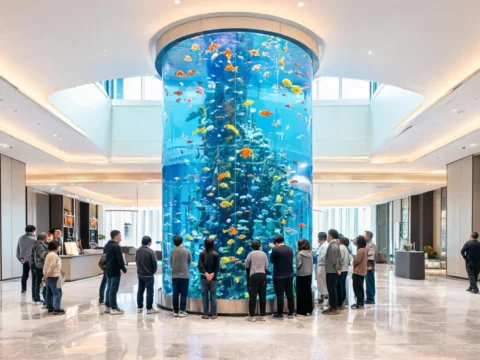
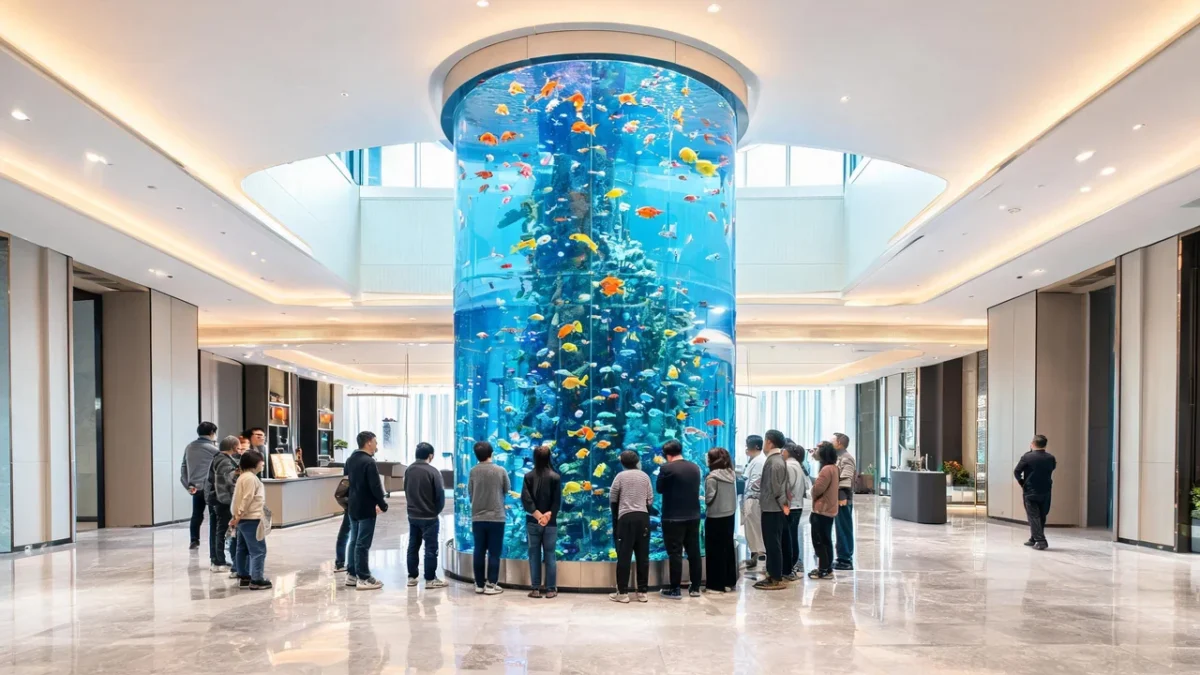
Corporate Branding and Interior Design
Corporations commission custom acrylic features for office lobbies, showrooms, and reception areas that reinforce their brand identity. Custom logo walls, dimensional lettering, product display cases, and donor recognition walls all require bespoke design work. These pieces serve both functional and marketing purposes, communicating professionalism and brand values to employees, clients, and visitors.
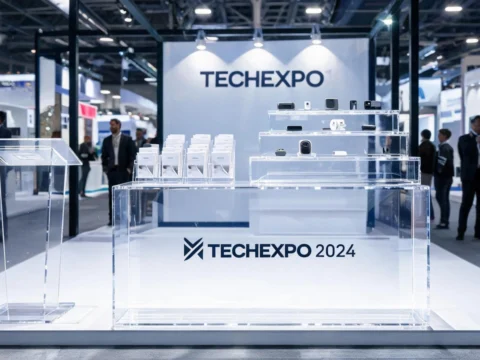
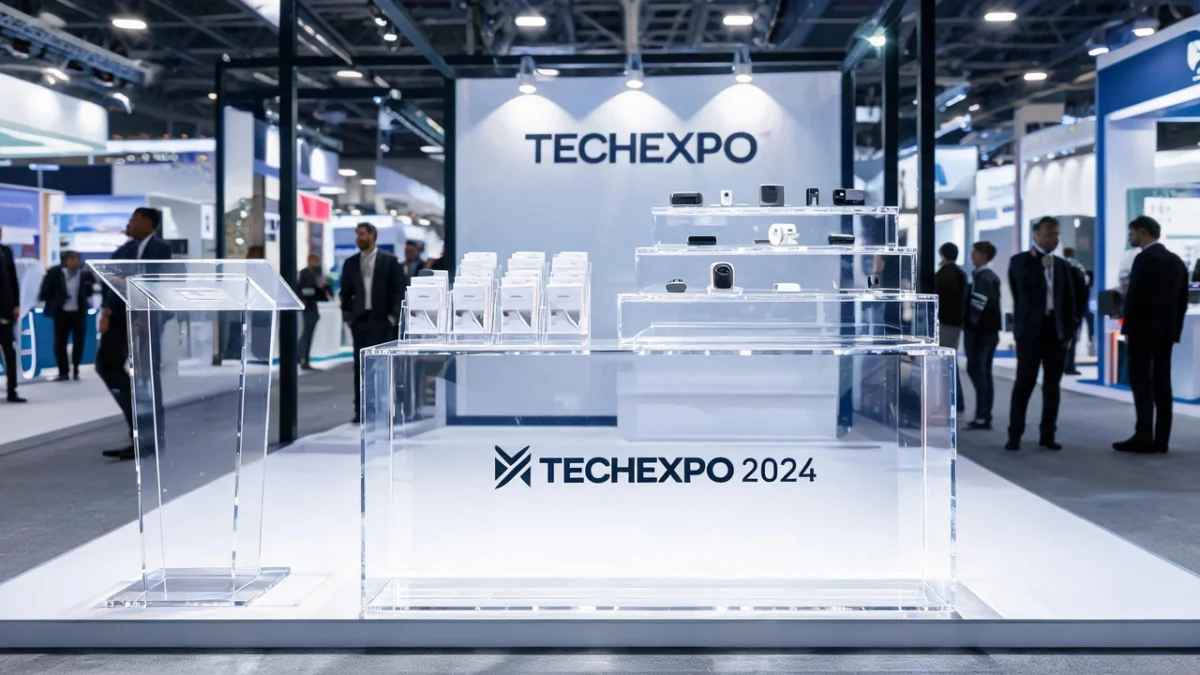
Trade Show and Exhibition Booth Design
Companies exhibiting at trade shows need custom acrylic display elements that stand out in crowded exhibition halls while packing and shipping efficiently. Custom backlit acrylic signs, product display stands, and literature holders are designed to fit specific booth configurations and branding requirements. Modular custom designs allow exhibitors to create a premium look that assembles quickly and survives the rigors of trade show shipping and handling.
Production Process and Timeline

Understanding the production process helps you plan your project timeline and set realistic expectations. Custom acrylic display fabrication typically follows these stages.
Design and Engineering (1-2 weeks): This phase includes concept development, 3D modeling, technical drawings, and material specification. A good fabricator will help you optimize your design for manufacturability, suggesting modifications that maintain your vision while reducing cost and production time. Detailed shop drawings are created for your approval before production begins.
Prototyping (1-2 weeks): For complex or high-volume projects, a prototype is produced for evaluation. This allows you to verify dimensions, assess structural integrity, test product fit, and evaluate the visual result in your actual retail environment. Prototyping adds time and cost but dramatically reduces the risk of expensive mistakes in production.
Production (1-4 weeks depending on complexity): Once the design is finalized, production begins. This typically involves CNC cutting or laser cutting the acrylic components, edge finishing, surface treatment, printing or branding application, assembly, and quality inspection. Simple displays might be produced in a few days, while complex multi-component fixtures can take several weeks.
Shipping and Installation: Acrylic displays are carefully packed to prevent damage during transit. Large or complex displays may require professional installation. Factor shipping and installation time into your project timeline, especially if the display needs to be ready for a specific event or season.
Cost Optimization Strategies
Custom acrylic displays are an investment, but there are proven strategies to get the most value from your budget without compromising quality or impact.
Design for Modularity: Instead of one large custom display, consider designing a modular system with interchangeable components. A base unit with swapable shelves, risers, and graphic panels can serve multiple product lines and seasonal promotions. The initial investment is similar, but the cost per use drops dramatically over time as you reconfigure the display for different purposes.
Standardize Components: Using standard acrylic thicknesses, common hardware, and repeatable design elements reduces fabrication complexity and cost. Custom shapes and non-standard thicknesses require special tooling and setup, which increases cost. Work with your fabricator to identify which custom elements truly add value and which can be standardized.
Order in Volume: Unit costs decrease significantly with volume. If you need displays for multiple locations, ordering everything at once triggers bulk pricing. Even if not all locations need displays immediately, the savings from bulk ordering usually outweigh the storage costs.
Balance Aesthetics and Function: Every decorative element adds cost. Evaluate each design feature critically — does it enhance the customer experience and drive sales, or is it merely decorative? Focus your budget on elements that directly impact product presentation and customer engagement. A simple, well-executed design often outperforms an elaborate one that tries to do too much.
Investing in well-designed custom acrylic displays pays dividends in brand perception, customer engagement, and sales performance. By understanding the design process, material options, and cost optimization strategies outlined here, you’re equipped to create displays that not only look stunning but deliver measurable business results.
Frequently Asked Questions
How much does a custom acrylic display cost?
Simple countertop displays start at $50-150. Complex custom designs with lighting, branding, and multiple components range from $200-1,000+ depending on complexity.
What is the lead time for custom displays?
Standard production takes 10-15 business days. Simple designs may be faster, while complex projects requiring prototyping can take 3-4 weeks.
Can I get a prototype before production?
Yes. Most fabricators offer prototyping services for custom designs. Prototypes let you test fit, function, and appearance before committing to full production.
What information do I need to provide for a custom quote?
Provide dimensions, a sketch or CAD file, quantity, material preference, finish details, and any special requirements like lighting or custom branding.
Can custom displays include my company logo?
Absolutely. Logos can be laser-etched, UV-printed, vinyl-applied, or reverse-printed on acrylic displays. Your fabricator can recommend the best method.
What file formats do fabricators accept for custom designs?
Most accept DXF, SVG, PDF, and AI vector files. Hand sketches work for simple projects, but vector files ensure the most accurate reproduction of your design.
Can custom acrylic displays be modified after production?
Minor modifications like adding holes or trimming edges are often possible. Major design changes typically require remaking the piece, so finalize the design before fabrication begins.